
Timber Roof Trusses Explained for Builders and Contractors
Key Takeaways:
Timber roof trusses are an efficient structural framing system that Ontario contractors commonly use to construct residential and other projects. Their primary benefits include:
- Superior strength
- Greater load-bearing capacity
- Minimized material waste
- Improved design flexibility
- Simple and efficient installation
These versatile trusses can be used to build anything – from standard homes to barns, garages, and more.
An Introduction To Timber Roof Trusses
Typically, trusses are made of either metal or wood. The latter category of trusses is commonly known as timber roof trusses. Though they are frequently used in modern construction, the use of timber trusses can be traced back to 3000 to 2500 BCE. That said, they truly started gaining popularity from the 16th century onwards, with the modern version we know today originating in the 1950s.
For contractors and builders, the world of timber trusses can be a fascinating one. And in today’s blog, Fonthill Lumber Inc., Ontario’s top truss engineer, will lay out everything you need to know about them.
Definition of a timber roof truss
Let’s shift matters into high gear and start straight with the definition. A timber roof truss can be described as a wooden structural framework carefully arranged in a triangular shape to support the creation of sturdy roofs. They transfer loads efficiently and are quite stable, structurally speaking.
Key components of a timber truss system
A standard roof truss design comprises:
- Top chords
- Bottom chords
- Web members
- Connection plates
Each of these works together to support the effective distribution of external loads.
How timber roof trusses support structural loads
It is the triangular shape of trusses that allows them to spread the weight of external loads across the entire structure instead of concentrating it on an individual member.
Common applications in residential and agricultural construction
Modern timber roof framing systems are commonly used to build:
- Homes
- Garages
- Barns
- Workshops
- Sheds
- Agricultural buildings
Basically, any structure that prioritizes strength, efficiency, and versatility can be built with the help of engineered roof truss systems.
How Timber Roof Trusses Work
The mechanism of roof trusses is quite interesting. Understanding the strength and science of roof trusses can help builders truly appreciate the load-bearing capacity and stability of an average framing system.
Compression and tension forces within a truss
Striking the right balance between compression and tension is a part of every timber roof truss design. While the top chord takes care of compression by handling roof loads, the bottom chords resist the tension from these loads, preventing them from getting pushed outwards.
Load transfer from roof to supporting walls
Along with roofing materials, timber trusses will be exposed to a combination of other loads, including snow, wind, rain, etc. These loads carry forces which move through the individual members of the system, ultimately getting transferred to supporting walls to minimize their impact.
The role of joints and connections
Connectors and fasteners also play an essential role in load distribution. In fact, they support the effective movement of loads through individual members.
Why triangular geometry improves structural performance
The reason why timber truss construction takes on a triangular shape is because this shape can naturally resist deformation. As the strongest geometry out there, triangular trusses can span significant distances without compromising the strength and stability of the entire structure.
Common Types of Timber Roof Trusses
While the triangular shape is the signature style of timber trusses, they come in several design options to match different span requirements, architectural goals, and structural demands. Builders can choose from:
King post timber trusses
Perfect for standard homes with shorter spans, king post timber trusses feature a central vertical member that lends them their stability. They are one of the simplest and most economical types of trusses.
Queen post timber trusses
Unlike the king post version, queen post trusses feature two vertical members instead of one. This supports the creation of spaces with longer spans.
Fink timber trusses
Ontario homes feature fink trusses more than any other type. That is because they offer the perfect balance of strength, efficiency, and load-bearing capacity, which makes them rather popular.
Scissor timber trusses
Featuring intersecting bottom chords, scissor trusses are used to create high vaulted ceilings, which gives them an air of grandeur.
Hammer beam timber trusses
While most trusses are covered to hide the framework, that is not the case with hammer beam trusses. They are left exposed to contribute to the architectural requirements of a building. They are perfect for rustic interiors.
Attic timber trusses
The primary purpose of attic timber trusses is to create usable interior space within the roof system of a building. This space can be used for either storage or as living areas.
Pointers To Choose The Right Timber Truss Type:
- Span requirements of the project
- Intended use of interior spaces
- Roof pitch requirements
- Structural load demands
- Building code compliance
- Material selection and timber grades
- Architectural design and intent
Builders should remember that the best truss type is one that fits into the project’s budget and structural requirements without cutting corners.
Advantages of Timber Roof Trusses for Builders and Contractors
Choosing timber over metal residential roof trusses has certain advantages, which have been listed below:
High strength-to-weight ratio
Timber roof framing offers an excellent strength-to-weight ratio while being lightweight and affordable. They can bear significant loads without weighing down in the long run.
Faster installation and construction efficiency
Manufacturing timber trusses is relatively less time-consuming, thus proving their suitability for projects with tight timelines. Moreover, they arrive ready to install, thereby improving the overall efficiency of construction projects.
Long-span capabilities
Modern engineered truss systems can span incredible lengths without requiring additional interior support. In fact, no compromises are made to enable the construction of spaces with large spans.
Design flexibility for different roof styles
Wood is a more pliable material, which allows for the creation of custom roof profiles for boutique projects. Plus, timber trusses already come in several pre-existing styles, offering endless design possibilities.
Sustainable and renewable building material
A renewable structural material, timber trusses support the creation of sustainable projects – especially if the wood has been responsibly sourced. Plus, prefabricated trusses minimize material wastage, which reduces the overall carbon footprint of a project.
Reduced on-site labor requirements
Since trusses are pre-engineered and delivered ready for installation, the need for extra labor or on-site modifications is considerably reduced. This enables faster framing – especially when compared to stick framing methods.
With all these benefits combined, it is safe to say that wooden roof trusses are one of the most efficient framing solutions available.
Timber Roof Trusses vs Rafters: Key Differences
Although it’s not exactly an apples-to-oranges comparison, roof trusses and rafters are very different from each other. Before construction begins, though, builders often have to go through the motions of the roof trusses vs rafters debate with their crew, which can actually support the selection of the most suitable framing solution.
Structural design differences
While timber trusses feature interconnected triangular members for better load distribution, rafters make use of individual members that are assembled into a frame onsite.
Installation requirements
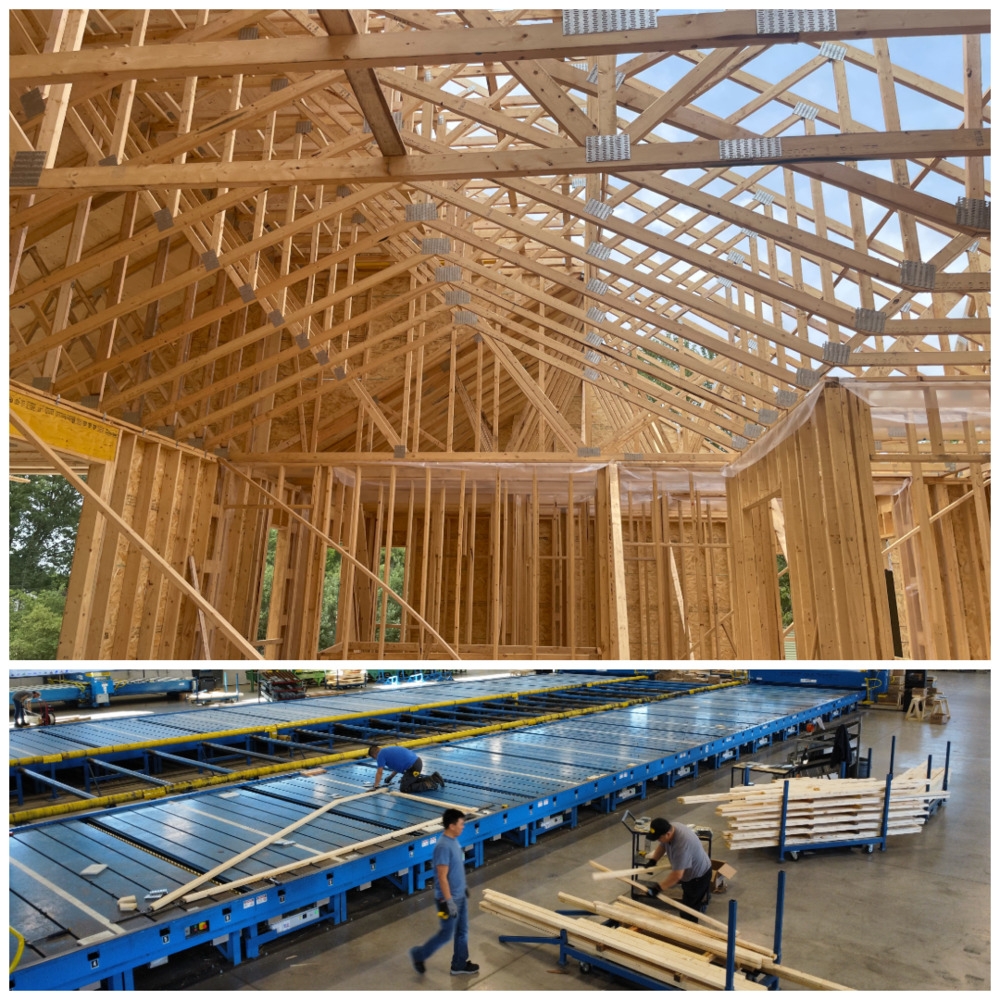
Since trusses are prefabricated in controlled facilities, their installation requirements are minimal. A bare-bones crew can likely finish installing them in a day. Rafters, on the other hand, require plenty of field labor for both construction and installation.
Span capabilities and load performance
The basic structure of trusses allows them to distribute loads evenly and efficiently. They can also achieve greater spans with less material. Rafters use a lot more material to span distances and carry loads efficiently.
Cost and labor considerations
Rafters are a better choice for projects that require a highly customized roof system. They can fit into their higher budgets too without causing trouble. Meanwhile, trusses are more affordable due to their pre-engineered nature.
Best applications for each system
Contractors can use trusses to build:
- Residential spaces
- Agricultural barns
- Commercial projects
On the other hand, rafters are better suited to:
- Custom roof designs
- Renovations
- Heritage site repairs
- Projects with limited delivery access
Step-by-Step Timber Roof Truss Planning and Installation Process
Timber trusses might be efficient and quick to install, but they require careful planning to get to that stage. The journey that most trusses go through involves the following steps:
Step 1: Determine building requirements
It all starts with defining the building’s dimensions and key configurations. Its intended use also plays a pivotal role in the roof’s overall design.
Step 2: Select the appropriate timber truss design
Once the project’s core requirements have been laid out, builders can assess various truss styles to determine which type matches its span, architectural goals, and structural demands.
Step 3: Calculate loads and spans
Load and span calculations of the chosen truss type come next. At this stage, builders and architects should be mindful of proper truss spacing requirements. Maintaining appropriate gaps between individual members supports better load distribution. That said, engineers should also account for live loads, dead loads, snow loads, and wind forces in their calculations.
Step 4: Prepare supporting wall structures
The site must be ready for truss installation once they are delivered onsite. This means load-bearing walls and support systems should have already been constructed.
Step 5: Install and align trusses
Temporary bracing can help with proper installation and alignment. Perfectly aligned trusses retain their structural performance in the long run.
Step 6: Secure connections and bracing
Using the right permanent bracing and fastening systems, including metal plates and corrosion-resistant fasteners, can prolong the life of the entire truss system.
The Importance of Truss Plates and Connections
One of the most overlooked details during truss planning and installation is the type of connector used. However, it is a critical detail to skip. By understanding roof truss plates, builders can ensure secure connections and long-term stability.
Truss Plates: Role, Materials & Types
Most modern truss plates are made of galvanized steel to offer superior rust resistance and durability. These fasteners help in creating strong mechanical connections between individual members, which in turn aids proper load distribution. In fact, reliable connections offer the following benefits:
- Enhanced load transfer
- Improved structural stability
- Consistent performance
- Long-term durability
Common Installation Challenges and Mistakes to Avoid
A couple of common timber truss design and installation mistakes can create unnecessary hurdles and material waste on-site. However, knowing about them can help in the prevention of the following errors:
- Improper load calculations: Underestimating the project’s load requirements negatively impacts the safety and stability of its roof system
- Incorrect truss spacing: Improper spacing can weaken the roof’s structural stability and load-bearing capacity
- Inadequate bracing and support: Skipping temporary bracing can lead to the installation of misaligned trusses
- Poor connection detailing: Weak connections can considerably reduce the lifespan of a truss system
Conclusion
One of the most dependable framing options available, timber roof trusses combine strength, stability, and load-bearing capacity to provide lasting performance. Fonthill Lumber Inc. provides Ontario builders and contractors with the most versatile and sustainable custom roof truss systems. Contact us to learn how our modern engineered structures enable the efficient construction of homes, barns, garages, and more.
FAQs
What is a timber roof truss?
It is a triangular-shaped structural framework made up of interconnected wood members to support the load requirements of the roof of a building.
What are the advantages of timber roof trusses?
Timber roof trusses offer several benefits, including quick and efficient installation, effective load distribution, reduced labor requirements, greater design flexibility, and long span capabilities.
How far can a timber roof truss span?
Timber roof trusses can span really long distances. For example, at Fonthill Lumber Inc., we achieved the impossible by designing an 80-ft-wide truss system.
Are timber roof trusses better than rafters?
While neither of them is better than the other in absolute terms, roof trusses tend to be the more cost-efficient choice.
What types of buildings use timber roof trusses?
Timber roof trusses are used to build homes, barns, garages, workshops, sheds, and other structures that require an efficient roof framing system.
