
Roof Truss Design Guide for Builders and Contractors
Key Takeaways:
With a well-planned roof truss design, builders can achieve multiple project goals in one go, including:
- Strength
- Cost-efficiency
- Long-term performance
Factoring in load, span, materials, and building code requirements is critical when designing trusses. A thorough understanding of each of these factors can help builders avoid costly mistakes and ensure the use of the right truss for the right project.
Efficiency exemplified, roof trusses have taken over Ontario construction. Despite their soaring popularity, many builders still use rafters to complete their projects, thereby missing out on the many benefits trusses offer.
This can be chalked up to a lack of awareness of how roof trusses work – particularly in the design department. That is why today’s blog from Fonthill Lumber Inc., Ontario’s top truss manufacturer and supplier, will serve as a guide for builders and contractors to understand everything they need to know about roof truss design.
What Is Roof Truss Design & Why It Matters
To explain roof truss design and its importance, we have to get into the nitty-gritty of roof trusses themselves. This will help in painting an accurate picture of how these essential structural components function.
What is a roof truss?
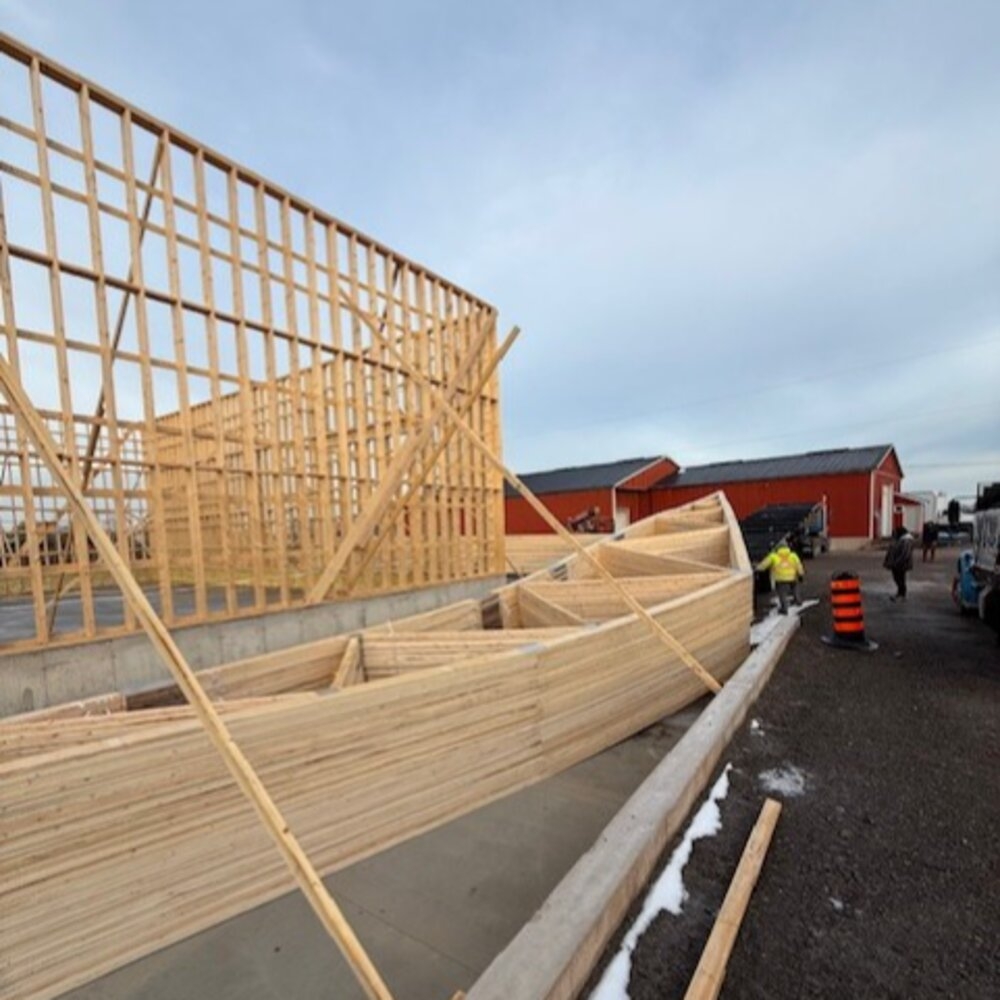
A roof truss is a prefabricated structure, typically made of timber or metal, whose purpose is to support the roof and distribute its weight or loads evenly across the walls underneath it. The key difference between rafters and trusses is that trusses are made of interconnected members that form a solid, robust, and highly efficient triangular shape.
Key components of a roof truss system
All roof trusses have a few things in common. Each type typically features a top chord, a bottom chord, and individual web members that come together to form a stable system that is highly effective in distributing loads. These three components serve as the foundation of most roof framing design guide principles.
Why does roof truss design impact structural performance?
Proper roof truss design plays a critical role in the building’s capacity to handle weight, weather, and long-term stress. A poorly designed truss system is likely to sag, distribute loads unevenly, and even collapse over time.
Role of builders and engineers in truss design
Both builders and engineers are essential for the fabrication of strong roof trusses. While engineers take care of calculations, builders are involved in choosing the right roof truss type based on the real-world conditions of their project. Close collaboration between both of them ensures the manufacturing of structurally sound and safe trusses. That said, builders tend to prefer roof truss systems that balance cost-efficiency and structural integrity.
Types Of Roof Trusses Used In Residential Projects
Builders are spoilt for choice when it comes to roof truss type and design options. However, the key is to pick the type that actually meets the structural and architectural requirements of their project. Popular roof truss types include:
King post truss
Simple, easy to build and install, king post trusses are a cost-effective choice for homes with short span requirements. In fact, they are commonly found in small residential homes.
Fink truss
One of the most common residential roof truss layouts, fink trusses are known for their distinctive W-shaped pattern. This pattern offers the most efficient way to distribute loads, making it the perfect choice for most standard Ontario homes.
Scissor truss
By sloping the bottom chord of the structure upwards, scissor trusses help in the creation of impressive vaulted ceilings that are often found in public structures such as cathedrals. Scissor trusses might also be used in modern homes that place greater emphasis on aesthetics.
Attic truss
The best choice for space-efficient homes, attic trusses create usable space within the roof structure. This added space not only increases the square footage of the entire house, but also creates extra storage or livable space within the home.
Mono truss
Mono trusses feature a single slope on one side of the roof, as the other side is typically attached to an existing structure. They are mostly used to build extensions, garages, or modern architectural buildings with unique profiles.
Custom and engineered trusses
Projects with large spans, complex designs, or unique requirements rely on custom trusses to achieve their desired specs. Engineered trusses are capable of meeting the truss span and load calculations that custom projects demand. Builders who want to evaluate various configurations can go through our handy residential truss guide.
Key Factors That Influence Roof Truss Design
While there are many roof truss framing options to choose from, designing one requires carefully evaluating a group of factors that can influence its structural performance in the long run.
Span and load requirements
The span of a truss can be defined as the distance it must cover without requiring additional support. Accurate load calculations can help trusses with longer spans preserve their structural integrity over time, even when exposed to live and dead loads on a regular basis.
Roof pitch and geometry
The angle at which a roof is built can affect multiple facets of it, including its drainage, load distribution, and overall structural performance.
Material selection and lumber strength
The type and grade of lumber used to build trusses have a direct impact on their load-bearing capacity and long-term durability. It is better to invest in higher-quality materials. Despite increasing the project’s cost, they contribute positively to its longevity.
Building codes and regulations in Canada
Building codes can vary across provinces, and fabricated roof trusses must meet the basic minimum local code requirements before being used to build houses. Key criteria they must fulfil include local snow load, structural, spacing, and material requirements.
Environmental factors
Snow is inescapable almost throughout Canada. That is why roof truss designs should focus on snow load management. Wind upliftment should also be factored in, and so should rainwater drainage, so that finished roofs are prepared to handle all seasons.
Cost vs performance tradeoffs
For builders, striking the right balance between cost-effectiveness and durability is critical – especially when it comes to keeping their project within budget. Simpler trusses are generally cheaper and a solid choice for small-scale projects. Meanwhile, engineered designs offer better long-term value for large-scale or complex projects.
Checklist: Roof Truss Design Factors
Before designing roof trusses, the following factors should be accounted for:
- Roof span
- Dead and live loads
- Snow and wind loads
- Slope and pitch
- Lumber grade and type
- Local building code requirements
- Project budget
- Intended building use
How To Design Roof Trusses For Different Project Types
Builders need to coordinate with residential roof truss engineers to ensure that the truss meets their requirements. This involves collaborating in nearly every step of the journey.
Step 1: Define project requirements
Builders must internally figure out key details of their project before ordering trusses. These include building type, purpose, and overall design goals. Different projects will have different structural needs, which must be accounted for.
Step 2: Determine span and load conditions
Engineers can hop in here to figure out what the span of the roof should be along with how much load it is expected to handle, including snow, wind, and material weight.
Step 3: Select truss type
With residential roof trusses, builders have several design options to choose from. However, the final choice should be dependent on architectural, span, and load requirements. For example, fink trusses are perfect for all standard Ontario homes, while mono trusses might be more well-suited to any extensions existing homes require.
Step 4: Choose material and lumber grade
Roof trusses should be built with lumber materials that fulfil the project’s structural requirements. At the same time, they need to be strong and durable while fitting into the project’s budget.
Step 5: Finalize dimensions and layout
Determining the spacing and layout of individual members is critical in ensuring even load distribution of the entire roof structure. This can prevent issues such as deflection or sagging under weight over time.
Step 6: Validate with engineering calculations
The final truss should check all the boxes when it comes to structural demands and code compliance. A thorough engineering review is necessary for that. This ensures builders end up with components that pass inspections without requiring expensive reworks or adjustments.
Steps Checklist: Roof Truss Design Process
The following steps can support the construction of accurate roof trusses that deliver reliable performance while syncing with the specifications of the project they are meant for:
- Determine the type of project and its core usage
- Calculate span and other dimensional requirements
- Ascertain load capacity, including live and dead loads
- Select the right truss for the project’s demands
- Choose the most appropriate material
- Plan the truss’ layout and spacing
- Evaluate the truss’s compliance against local building codes
- Get the entire structure verified by an engineer
While choosing the right roof truss can feel like a daunting process, builders can simplify their choice by using their project’s specifications as a roadmap.
Common Roof Truss Design Mistakes Builders Should Avoid
While planning roof truss design, builders should try to steer clear of pitfalls that can adversely impact the overall performance of their project.
Ignoring load calculations
Skipping truss span and load calculations can lead to the fabrication of structures that are more likely to fail under the slightest pressure. This can result in very costly corrections later on.
Choosing the incorrect truss type
Selecting the wrong truss for one’s project is bound to result in inefficiency and performance issues later down the line, which can only be fixed with expensive reworks.
Poor spacing and layout planning
Trusses with extremely closely packed or far-apart members are likely to suffer from stability issues as well as load performance problems.
Overlooking building code requirements
Poorly built trusses do not meet local building code requirements, thus failing inspections. This can delay projects and call for costly redesigns.
Using low-quality materials
Inferior material quality compromises the long-term durability of the build, resulting in structural damage that can be potentially dangerous for residents.
Checklist: Common Roof Truss Design Mistakes To Avoid
Avoiding the following blunders is key to building projects that last:
- Omitting structural calculations from the plan
- Using the standard trusses where they don’t apply
- Maintaining the wrong spacing between trusses
- Not factoring in environmental loads
- Ignoring professional advice
- Building with poor-quality lumber
Wide Span Roof Truss: Design Considerations & Limitations
Wide span roof trusses are more challenging to work with because of their scale. Understanding their limitations can help builders make smarter design choices:
Definition of a wide span truss
Wide span trusses cover long distances without requiring interior support. They are commonly used for multi-unit residential buildings or large mansions.
Structural challenges with larger spans
Long spans, though they create large, uninterrupted interior spaces, can put a lot of stress on individual truss members. Precise engineering and reinforcement are necessary to prevent major structural issues.
Material reinforcement
The use of stronger materials along with additional webbing can help in the preservation of the structural integrity of wide-span trusses.
Cost implications of wide span designs
Wide span trusses might provide more usable interior space, but they also take a lot more material to make, which can significantly drive up project costs.
Prefabricated Vs. Custom Roof Trusses: What Should Builders Choose?
Both prefabricated and custom roof trusses bring their own advantages to the table, and choosing between them boils down to project requirements:
Advantages of prefabricated trusses
Manufactured off-site, prefabricated trusses offer unparalleled precision and consistency. They also cut down on installation time and labor requirements, thus helping builders save money.
When to use custom trusses
As far as buildings with unique designs and complex rooflines are concerned, custom trusses are the way to go as they can meet their demands.
Cost and installation differences
In terms of cost-effectiveness, prefabricated trusses are the better choice. However, custom trusses, though expensive, provide greater design flexibility.
Applications
Prefabricated trusses are a great choice for standard builds, while custom trusses work best for large-scale or complex projects.
For more information on roof trusses in general, builders can refer to our comprehensive guide.
Conclusion
Good roof truss design blends structural integrity, cost-effectiveness, and long-term performance, thus offering builders a dependable system to build roofs with. That said, understanding material, span, and load considerations can help builders choose the right truss while avoiding costly mistakes. Fonthill Lumber Inc. is one of Ontario’s largest suppliers of premium custom roof trusses that are expertly designed to ensure long-term project success. Contact us to learn more about our durable roofing systems.
FAQs
What is the most common roof truss design?
Fink trusses are the most commonly used truss design. Their distinct W-shaped profile makes them the most load-efficient choice for standard homes.
How far can a roof truss span without support?
Each roof truss type has its own span limitations. However, custom-engineered trusses can span long distances if the project demands.
What factors affect roof truss design?
Key factors that affect roof truss design include the roof’s span, load, pitch, and material requirements. Local building codes play a role, too.
Are prefabricated roof trusses better than traditional framing?
When compared with rafters, roof trusses are a more efficient and consistent way to construct high-quality residential projects.
Do roof trusses need engineer approval in Canada?
Yes. Roof trusses are generally verified by engineers to ensure they are compliant with local building codes.
