
How Proper Roof Truss Bracing Improves Structural Stability
Key Takeaways:
Proper roof truss bracing plays a critical role in maintaining the entire structure’s stability – both during and after installation. It also offers other advantages, including:
- Effective load distribution
- Wind force resistance
- Truss movement prevention
- Long-term truss performance
Understanding roof truss bracing requirements can help contractors minimize installation risks and extend the lifespan of the entire building.
When talking about roof trusses, framing might be the focus of conversation, but the act of bracing is just as important. Proper roof truss bracing involves the installation of vital structural members that stabilize the entire truss system and prevent movement induced by external forces.
Basically, bracing helps trusses resist lateral movement while ensuring perfect alignment during construction and throughout the life of the roof. In this blog, Fonthill Lumber Inc. – Ontario’s most trusted truss manufacturer for the last 75 years, will discuss the importance of bracing.
The role of bracing in structural stability
Think of bracing as a support network for roof trusses. Roof trusses need the stability they provide to function as a complete structural system. Without bracing, individual members of the truss are very likely to shift, twist, or buckle under constant exposure to loads.
How roof loads affect truss performance
Even if live loads are erratic and weather dependent, dead loads are a constant for roof trusses, thanks to the presence of roofing materials. In any case, both live and dead loads can cause them to shift and weaken over time. That’s why maintaining truss stability and support with the help of bracing is critical.
Consequences of inadequate bracing
When bracing is insufficient or absent, equal load distribution takes a massive hit. As a result, issues such as structural distortion, roof movement, and even catastrophic failures may arise. Similarly, lack of temporary bracing can cause installation errors and accidents. The successful installation of a roof truss system relies on effective bracing.
How Roof Trusses Achieve Structural Strength
To understand the strength of roof trusses, one needs to learn about their anatomy, how they distribute loads, and how they handle compression and tension forces. Please note that bracing is a critical part of the last two.
Load transfer through roof trusses
As a carefully and precisely engineered framework, it is the job of roof trusses to transfer loads efficiently. That’s why they are triangular in shape with internal web members and top and bottom chords. Their anatomy actually helps transfer loads to supporting walls.
Compression and tension forces within trusses
While the top chords of a truss handle the compression caused by loads, its bottom chords resist the tension caused by various forces. Meanwhile, web members connect the two to strike the right balance.
The relationship between trusses and bracing
The truth is, no matter how efficiently designed the roof is or how strong its boards are, without proper bracing, collapse is inevitable. By preventing trusses from shifting while enhancing structural performance, bracing extends the lifespan of the entire roof system.
Why stability matters during and after installation
Maintaining alignment with the help of bracing during installation is non-negotiable. So is ensuring the structure’s long-term stability. Before sheathing and permanent restraints find their place on the roof, both temporary and permanent bracing should be installed to prevent misalignment and other structural issues.
Types Of Roof Truss Bracing Used in Construction
While this might come as a surprise to new contractors, several types of roof truss bracing are actually used in construction. Each of them serves a different structural purpose, but together they create an unshakeable roof:
Temporary truss bracing
This type is used when installing prefabricated truss systems. They help stabilize and align the entire framework before permanent supports can be added. Temporary bracing also improves worksite safety by preventing trusses from falling out of place.
Permanent truss bracing
Affixed after temporary bracings, their permanent counterparts are part of the finished structure. Their entire purpose is to provide long-term support and maintain the building's structural integrity.
Diagonal bracing
Running at an angle across several truss members, these help in the prevention of lateral movement, particularly the type caused by construction or wind loads.
Continuous lateral restraint bracing
Continuous lateral restraints are used to join multiple truss members together to aid in preventing sideways movement.
Web member bracing
Each internal truss member also needs its own fastening system, and that is where web member bracing comes in. It prevents individual members from buckling under compression loads.
Gable end bracing
Used only for gable end trusses, this type of bracing provides the kind of additional support these trusses need. Gable end trusses are typically exposed to wind forces, and hence require extra fastening systems to avoid structural problems.
How Proper Roof Truss Bracing Improves Structural Stability
Coming to the moral of the story, or rather the central theme of this blog, roof truss bracing was created to improve the long-term structural stability of the entire system. Here is how they do that:
Preventing truss movement during installation
Movement during installation is the leading cause of misalignment. Fortunately, temporary bracing can stabilize and align trusses to avoid unexpected shifts and related accidents.
Improving resistance to wind loads
When hurricane-like winds can uproot houses, it’s no surprise that very strong gusts can affect roof stability. Wind exerts a considerable amount of lateral pressure, which has the power to easily damage individual members if proper bracing is not used to adequately distribute their force throughout the structure.
Maintaining roof alignment and geometry
Temporary alignment ensures proper installation, but permanent alignment ensures robust performance. Braces keep trusses accurately positioned so that the roof can maintain its intended shape without compromising its load-bearing capacity in the long run.
Reducing the risk of structural failure
The risk of trusses twisting, buckling, or simply moving out of position is quite high if inadequate bracing is used. Sufficient bracing can minimize the likelihood of these issues, thus averting a complete structural failure caused by either live or dead loads.
Enhancing long-term building performance
Effective truss stability and support are essential for long-term durability. Bracing guarantees both by helping the roof resist movement, settlement, and the impact of external forces.
Checklist: The Key Benefits Of Bracing Right
Here is a quick round-up of the several benefits of roof truss bracing:
- More structurally stable systems
- Effective load distribution
- Superior resistance to lateral forces
- Minimal risk of installation-related accidents
- Better roof endurance
Contractors should treat bracing as more than a code requirement. Instead, they should view it as an indispensable component of the roof system.
Step-by-Step Roof Truss Bracing Installation Process
Installing bracing is not as simple as it seems. There is a protocol to be followed and we have listed its steps below so builders can brush up on their knowledge:
Step 1: Review engineered truss drawings
A well-engineered roof truss design is the stepping stone to appropriate bracing. Builders must carefully review engineered documentation and follow installation directions as is. A well-structured blueprint clearly maps out the truss’s bracing requirements and placements to eliminate all confusion.
Step 2: Install temporary bracing during erection
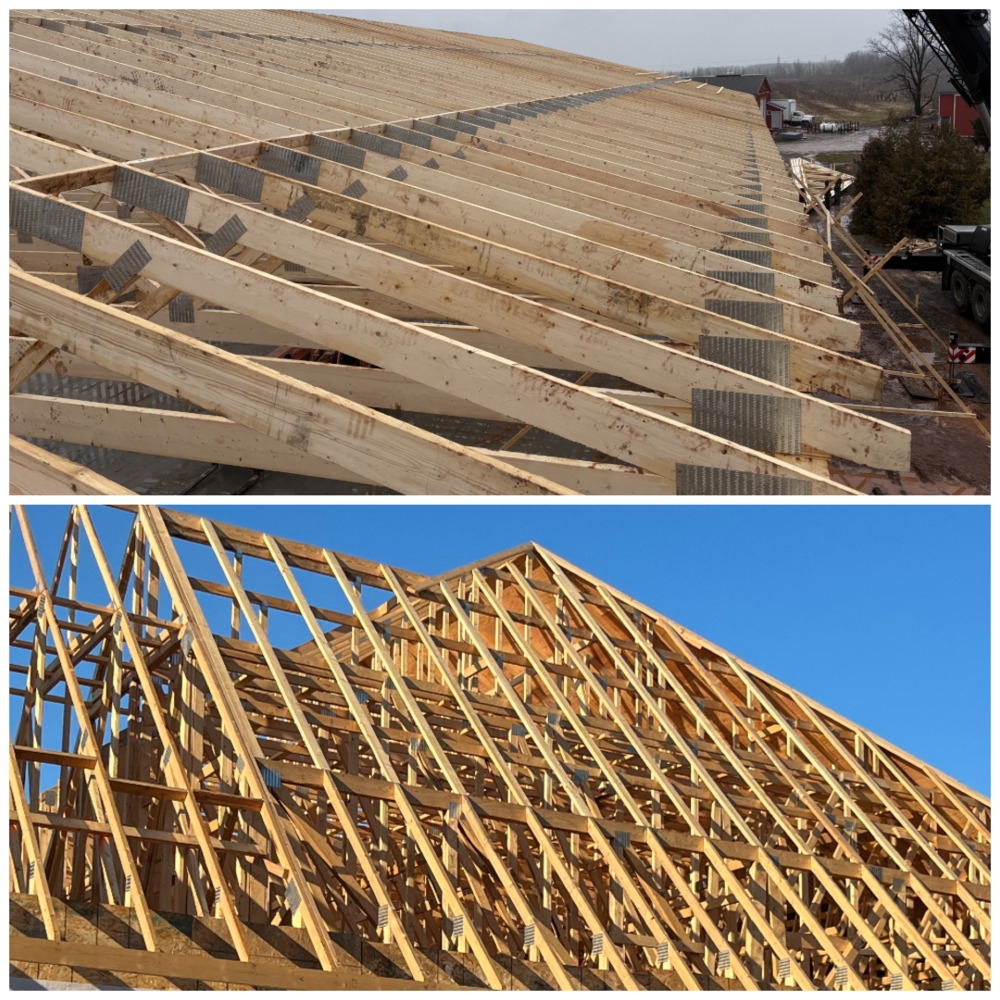
As a crane lifts and places trusses onsite, crews must begin the process of temporary bracing installation to keep the entire structure balanced and aligned.
Step 3: Verify truss spacing and alignment
Before adding permanent fasteners to the mix, builders must verify if the roof is properly aligned and adequately spaced. Evaluating the site’s conditions, including truss spacing requirements, against the blueprint ensures accuracy.
Step 4: Install permanent lateral restraints
If the alignment is good to go, crews can proceed with the installation of permanent restraints to keep the sideways movements of individual members in check.
Step 5: Add diagonal and web bracing
Affixing diagonal braces to internal web members is a great way to increase their resistance against movement while improving the structure’s overall stability.
Step 6: Conduct final structural inspection
A thorough visual inspection of all the braces, fasteners, and connectors attached to the truss will help builders verify whether they have been installed correctly and are up to code.
Common Roof Truss Bracing Mistakes Builders Should Avoid
Attaching braces to residential roof trusses is a relatively simple job on the surface, but mistakes may be hiding underneath. It is critical for construction crews to avoid the common ones we have listed below:
Skipping temporary bracing
Never underestimate the importance of temporary bracing. Without them, trusses are like a ship without an anchor. They are likely to shift with time, thereby quietly breeding a disaster waiting to happen.
Incorrect brace placement
This is almost just as bad as skipping temporary braces. Incorrect placement can also lead to long-term stability issues, which come with their own set of drawbacks, as we have already established.
Ignoring manufacturer specifications
The truth is, every truss is different, and so are its bracing requirements. That’s why heeding the manufacturer’s instructions on fasteners and connectors is vital for code compliance and optimal truss performance.
Improper fastening methods
Loosely or incorrectly installed fasteners are likely to succumb to the pressures of external forces as well as live and dead loads. Crews must verify the security of connections used before adding sheathing or other roofing materials.
Failure to inspect bracing systems
A close and final inspection ensures braces are in place, thereby reducing the odds of damage or movement.
The Role of Truss Plates and Connections in Bracing Performance
Roof truss plates are just as vital as braces. Builders who recognize the importance of both are equipped to build homes with the most stable and sturdy roof systems around.
Role of truss plates in load transfer
By connecting structural members in a secure manner, truss plates allow loads to move efficiently throughout the system.
Connection integrity and stability
Strong connections influence the overall efficacy of bracing. Braces are able to hold their own only when nearby attachments have been installed properly.
Fastener performance considerations
Every single piece of connector, fastener, or plate used to join individual members must meet engineering specifications and should be secured as per the manufacturer’s instructions. This eliminates the chances of weak connections while providing the following benefits:
- Enhanced structural performance
- Greater bracing effectiveness
- Improved resistance to movements
- Extended lifespan and increased durability
Roof Truss Bracing Considerations for Different Building Types
From sheds to cottages, multi-unit homes to garages – each structure brings its own roof truss bracing requirements, which have been discussed below for your reference:
Residential homes
To extend the longevity of residential roofs, standardized permanent braces should be used. Following engineering layouts support the roof’s spans and loads without any compromises.
Garages and sheds
Since they are generally smaller in size, their bracing requirements for shed roof trusses are also simpler. However, using braces is still mandatory for long-term roof performance.
Long-span roof structures
Buildings with wide-span roofs may require additional bracing to stay stable and handle loads more efficiently.
Agricultural and storage buildings
Agricultural structures commonly feature large-span trusses that need the right support systems to remain stable and resist winds and other loads.
Conclusion: Why Proper Roof Truss Bracing Is Essential for Structural
As one of the leading engineers of precision-manufactured roof trusses in Ontario, at Fonthill Lumber Inc., we believe that bracing is absolutely critical for roof safety, long-term performance, and durability. Builders who spend extra time reviewing engineering specifications and installing temporary and permanent bracing deliver lasting projects. Contact us if you want strong roof trusses with superior load resistance for your next project.
FAQs
What is roof truss bracing?
Roof truss bracing involves the installation of braces that help in the long-term alignment and stabilization of roof trusses.
Why is roof truss bracing important?
Bracing ensures the truss is protected against unnecessary movements induced by environmental forces as well as live and dead loads. It prevents structural failure and ensures the long-term safety and performance of the entire roof system.
What is the difference between temporary and permanent bracing?
Temporary bracing is used during installation to align trusses. Meanwhile, permanent bracing is a part of the finished roof system and provides ongoing structural support throughout its lifespan.
How far apart should roof truss bracing be installed?
Spacing depends entirely upon the design of the truss, its dimensions, load requirements, and engineering specifications. It is best to follow the manufacturer’s instructions as far as roof truss bracing is concerned.
Can improper bracing cause roof truss failure?
Yes. Missing or insufficient bracing can cause a host of issues, including buckling, movement, and alignment issues, which can eventually contribute to structural failure.
