
Simple Shed Roof Trusses: Structure, Materials, and Loads
Key Takeaways
Simple shed roof trusses are rarely ever simple. Structural planning is necessary to build them right, so is:
- Understanding truss anatomy
- Selecting the right materials
- Considering the project’s load requirements
Keeping these in mind will prevent you from either overbuilding or underbuilding trusses, which can lead to performance issues.
Building a shed is often not as simple as it seems. You can see complexities arise when you take roof framing into account. No matter how small the structure is, it still needs to safely transfer loads, resist the effects of the weather, and maintain its structural integrity in the long run.
That’s where roof trusses come in. Capable of handling snow loads, wind loads, and more without the need for interior support, they can span long distances safely and efficiently. This makes them the perfect choice for building sheds that are typically used as storage spaces, workshops, etc.
However, to build the best one, you need to know how trusses work. This includes understanding snow loads, wind uplifts, roofing weights, and long-term weather exposure. After all, each of these can lead to premature failure – even if the truss is simple with shorter spans, fewer members, and straightforward load paths.
That is why in this blog, Fonthill Lumber Inc. – Ontario’s leading truss supplier- will provide you with an in-depth guide on simple roof trusses for sheds, including how they differ from stick framing.
Basic Anatomy Of A Simple Shed Roof Truss
Before you start planning your simple shed roof truss, you must gain an understanding of its anatomy. Learning what it actually looks like will help you visualize load paths, thus making it easier to come up with a design that actually works. Let’s explore.
Top chord, bottom chord, and web members
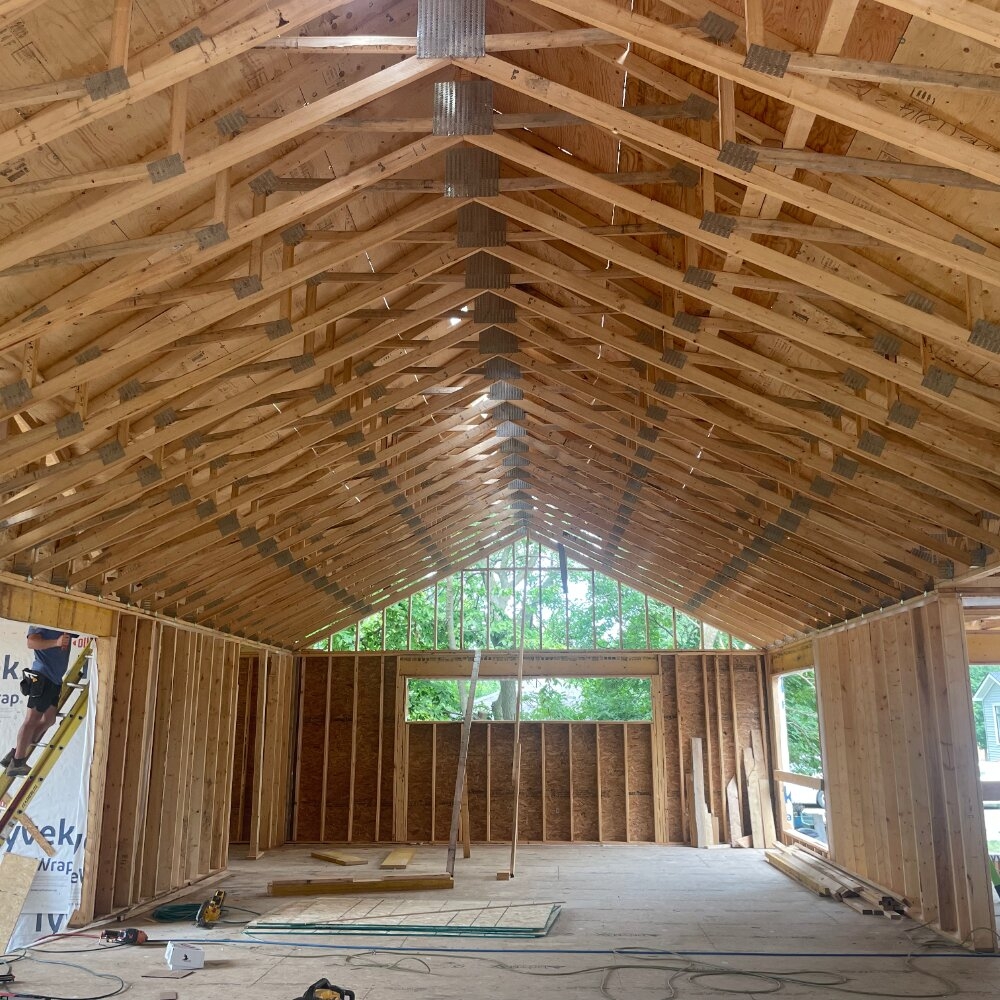
Most trusses have a triangular design, which is made up of three core elements. The first of these is the top chord, which forms the roof’s slope and is responsible for carrying its loads, including snow loads in particular. The second structure is the bottom chord, and its main purpose is to tie the walls together, thus helping maintain sturdiness and integrity. Lastly, the web members distribute weight between all the chords to prevent issues such as sagging or deformation.
Load paths in small span trusses
Load paths should be planned very carefully, as the robustness of the entire truss system depends on them. In this regard, you need to know that loads travel from the surface of the roof to the top chords of truss systems, straight into their webs, and down to their bearing walls. Each element plays a critical role – even if the span is shorter. Remember, improper load paths are the number one cause of deflection.
Common truss shapes used for sheds
Another roof truss basics you need to know concerns the most suitable profile for shed construction. In our experience, simple triangular profiles are the best choice because of their strength, efficiency, and ease of installation.
Common Simple Roof Truss Types Used For Sheds
The good thing about shed roof truss designs is that you have a couple of options to choose from. That means the design does not necessarily have to be simple. Your choice of roof truss type can lend it a unique character, thus making it stand out as an impressive specimen of construction. Some of the truss types you can consider include:
King post trusses
If a simplistic shed is truly what you want, you cannot go wrong with king post truss. It is best suited for sheds of small sizes. This type of truss uses a central vertical web to support roofs of shorter spans in the most efficient way possible. This central web is actually what gives it its name – it is known as the “king”. It is your most cost-effective option among all others.
Mono trusses
Recognize the single slope design? That is created with the help of mono trusses. This format is ideal for lean-to sheds where drainage direction is a critical factor. They can also be adapted to modern designs.
Gable trusses
Framed like a wall that features at the end of gable-style sheds, these trusses are capable of supporting high roof loads. They also provide stable vertical surfaces for sheathing and sliding.
Scissor-style trusses for storage sheds
For larger sheds that require extra interior height or small loft areas, scissor trusses are an excellent choice. Their increased clearance gives you plenty of vertical space to play with while maintaining structural stability for an overall long-lasting build.
Materials Used In Simple Shed Roof Trusses
Shed roof framing can quickly lose its strength and endurance if the wrong materials are used to build it. While metal is a good choice, it is often too heavy and too expensive for small-scale projects such as sheds. What you need is high-quality lumber along with a couple of other critical materials to keep the whole structure together. These include:
Lumber
The first and foremost thing you need is trusses made of superior lumber. However, before you narrow down your choice, it is wise to be aware of the different grades of lumber available in Ontario for trusses. SPF or Spruce, Pine, Fir are the most common timber choices. As for grades, most trusses are built with either No. 2 or No. 1 as these grades offer superior strength. For longevity and moisture-resistance, you must use lumber with a rated moisture content of 19% or lower.
Metal connector plates
Since roof trusses are custom-engineered structures, only specific plates can be used to connect them. The use of suitable plates ensures a secure connection and consistent load transfers – no matter how small the truss is.
Sheathing and fasteners
Just like metal plates, using the right sheathing or fasteners is also important. Proper sheathing improves the diaphragm strength of the structure. As for fasteners, they should be weather-resistant and capable of handling the load requirements of your shed construction project.
Moisture treatment and considerations
Using untreated lumber to build simple shed trusses is a disaster waiting to happen. When exposed to moisture, as it inevitably will be in the Ontario climate, untreated lumber is highly likely to warp or decay. Hence, it is critical to choose the right materials and to store them properly so moisture-related damage can be averted.
Material Planning Considerations Checklist
Before you narrow down materials for your simple shed roof truss, stack them up against the following considerations to determine if you have made the right choice:
- Span length of your shed
- Its roof pitch
- The local climate at your site
- The shed’s load requirements
- Storage or occupancy use
Using them as a shortlisting criterion can help you select the best possible materials for your project.
Understanding Loads On Shed Roof Trusses
Every single shed roof truss design must be planned around its load requirements to ensure the final structure can stand the test of time, weather conditions, and regular use. In that regard, having sound knowledge of the following loads is critical:
Dead loads from roofing materials
Dead loads are constant, which means the final roof truss of your shed must be able to handle them without consequence. These loads include shingles, metal roofing, underlayment, and sheathing. They all contribute to its permanent weight.
Live loads and maintenance access
Live loads are dynamic and temporary in nature. Not only are they inclusive of maintenance personnel, equipment, and material, but they also cover nature’s elements, such as rain and snow, which must be accounted for.
Ontario snow loads
The reason why we are mentioning snow loads separately is that the province of Ontario is prone to heavy snowfall during the winter months. This makes the snow load significant, even for small structures such as sheds. Oftentimes, accumulated snow can exceed the roof’s weight and, hence, should be calculated to prevent a cave-in.
Wind uplift
Strong winds and stormy weather can lift roof systems off if poor-quality connections are used. This is especially true for lighter trusses that are commonly found on sheds.
Load Planning At A High Level
Before determining specific load paths for your shed, you should:
- Identify the key use case for your shed, along with its size
- Confirm the roof’s pitch and truss style
- Take into account regional snow exposure
- Factor in the weight of the roofing material
- Evaluate safety margins
Knowing the individual value of each of these will help you perform accurate load calculations, thus leading to the fabrication of custom roof trusses that truly meet the requirements of your project.
When Simple Shed Trusses Should Be Engineered
As easy as it might seem, making a shed truss on your own can be a risky endeavor. Especially if you get the load calculations wrong. Instead of building them onsite on your own, it is better to have them engineered by a reliable truss designer, such as Fonthill Lumber Inc., for example. Here’s when you should get custom trusses made:
When larger and wider spans are required
The width of the shed can alter truss behavior. It can increase the impact of structural forces, thus creating the possibility of deflection, joint stress, or long-term sagging.
As a builder, you might be tempted to remove interior supports to create more open space, but this will shift the roof’s loads to exterior walls. Only engineered trusses can handle these forces effectively and safely.
When heavier roofing materials are used
The materials used to build the truss can increase its dead load. Especially if layered roofing systems and speciality finishes are used. This constant weight can affect the longevity of your shed’s roof if it's not properly constructed. Professional truss designers can adjust overall truss geometry accordingly to ensure dead loads are precisely accounted for.
When you need to build a storage loft
Whether the project requires a storage loft or a space for partial occupancy, both are common in residential projects. In any case, designing a shed with a loft requires professional intervention, as such roof systems have entirely different structural demands and load requirements. In fact, storage lofts introduce live loads, so they have to be accounted for as well.
Repeated load cycles and long-term durability
The general expectation is that a shed should last for decades with minimal manual interference. This is a tough ask – especially in Ontario, as freeze-thaw cycles, snow build, and wind and moisture exposure can impact its longevity. However, professionally engineered residential roof trusses are designed with predictable performance limits and safety factors to handle repeated loading and unloading.
Selecting The Right Roof Truss Approach For Shed Projects
Roof trusses for sheds should be designed thoughtfully so they not only last long but also pass local compliance checks and maintain resilience under different types of loads. Here’s the approach that should be taken to build them:
Match truss type to shed function
We have already discussed the different types of roof truss designs that can be used to build sheds. However, the chosen type should match the shed’s function. For example, a king post truss might be a good choice for a simple garden shed, while gable-fink trusses might work better for a loft.
Budget vs. long-term performance
Settling for cheaper framing materials and services might save you a few extra bucks during the construction of your shed, but they can increase its long-term costs when it comes to maintenance and repairs. Choose wisely.
Coordination with builders and framers
By coordinating with builders and framers early in the process, you can avoid unexpected delays, unnecessary modifications, and material waste. However, picking and choosing vendors with a reputation for high-quality products and services is a critical factor in building sheds that last.
Shed Roof Truss Selection Questions
Confused about which truss is right for your shed construction project? While our roof truss selection guide can help, asking the following questions can guide you towards the right answer:
- What will the shed be primarily used for?
- What are its span requirements?
- What will be the pitch of the roof?
- Will the shed carry additional loads?
- Is engineering support advisable?
Simple Shed Roof Trusses Vs. Stick Farming
As a builder, you have the option to pick between traditional stick framing or pre-designed trusses for your shed. While both these options work for smaller structures, using custom-made trusses has its advantages – at least as far as efficiency, consistency, and long-term performance are concerned.
Structural consistency
Roof trusses are precisely engineered structures with well-defined load paths and repeatable geometry. This ensures consistent structural performance throughout the roof system. Stick framing, on the other hand, introduces variability as it’s built entirely onsite.
Material efficiency
Roof trusses only use the material that is actually required to build them. This not only brings down material cost but also reduces waste while improving load distribution. In the case of stick farming, material waste is likely, as it is not as precise a method of construction.
Installation predictability
Pre-built trusses can be installed quickly, thus preventing delays. Plus, their precision build ensures reworks or onsite adjustments are not required, so your project can stay on track. That’s not the case with stick framing, where reworks are common.
Long-term performance
Deflection resistance is a default for engineered roof trusses, which improves their long-term durability and performance as compared to improvised framing methods.
Conclusion
While designing roof trusses for a shed might seem simple on the surface, it’s still an initiative that requires proper planning for it to succeed. Choosing the right materials and building according to the shed’s load requirements can prevent structural issues later.
The goal should be to build sheds with long-term performance in mind, and for that, you need to partner with the right lumber yard. Fonthill Lumber Inc. is Ontario’s leading roof truss supplier. Contact us to discuss your shed’s requirements and get accurately built trusses for them.
FAQs
What is the simplest roof truss for a shed?
For small and simple sheds, a king post truss is the most common choice.
Do shed roof trusses need to handle snow loads in Ontario?
Yes. No matter how small the shed is, it still must be built in accordance with its snow load requirements.
Can shed trusses be site-built instead of engineered?
Only if the shed has a very small span. For larger sheds, engineered trusses are safer and more consistent.
What lumber is commonly used for shed roof trusses?
SPF lumber is the most commonly used type due to its availability and predictable strength.
When should builders consider engineered roof trusses?
Sheds with wider spans, heavier loads, and storage areas should feature engineered roof trusses for long-term durability.
