
Dimensional Lumber Grades Explained for Builders and Contractors
Key Takeaways:
Factoring in dimensional lumber grades into construction projects can help builders and contractors determine the appropriateness of a particular piece of wood for structural, framing, or other applications. Grades reveal the following characteristics of lumber:
- Knots
- Splits
- Grains
- Common structural defects
Understanding lumber grades is essential to balancing structural requirements with material quality and costs.
Lumber has its own extensive glossary, and ‘dimensional lumber grades’ is just one of them. However, it is a very important term for builders and contractors to remember as the grade of lumber they use can impact the overall cost and performance of their project in a significant way.
That’s why experts from Fonthill Lumber Inc., Ontario’s top lumber yard with 75 years of experience, have compiled everything you need to know about dimensional lumber grades in today’s blog. Let’s begin!
What Are Dimensional Lumber Grades?
In the world of lumber, dimensional lumber grades are an indicator of the various traits of a piece of wood. These grades serve as categories of softwood boards based on their strength, stiffness, and visible patterns such as knots and wanes.
Understanding lumber grading standards
Pre-established standards determine the grades of dimensional lumber. These standards evaluate its structural characteristics and appearance to put it in categories that range from Select Structural to No. 1 & BTR, No. 2, and No. 3 in that order. Select Structural is the strongest type of dimensional lumber, while No. 3 is the lowest grade.
Why grading matters in construction
The role of grading in construction is to help builders and contractors select the most appropriate lumber type for their project. While it might seem that Select Structural should be the top choice for all projects, it may not be an ideal candidate for all applications. For example, framing lumber requires higher strength as opposed to wood used for non-structural applications like making furniture.
Who assigns dimensional lumber grades
In Ontario, the National Lumber Grades Authority is responsible for setting the standards for lumber grades available in the province. These standards are regulated under the Ontario Building Code to ensure complete compliance of available grades and types.
Grade stamps and what they indicate
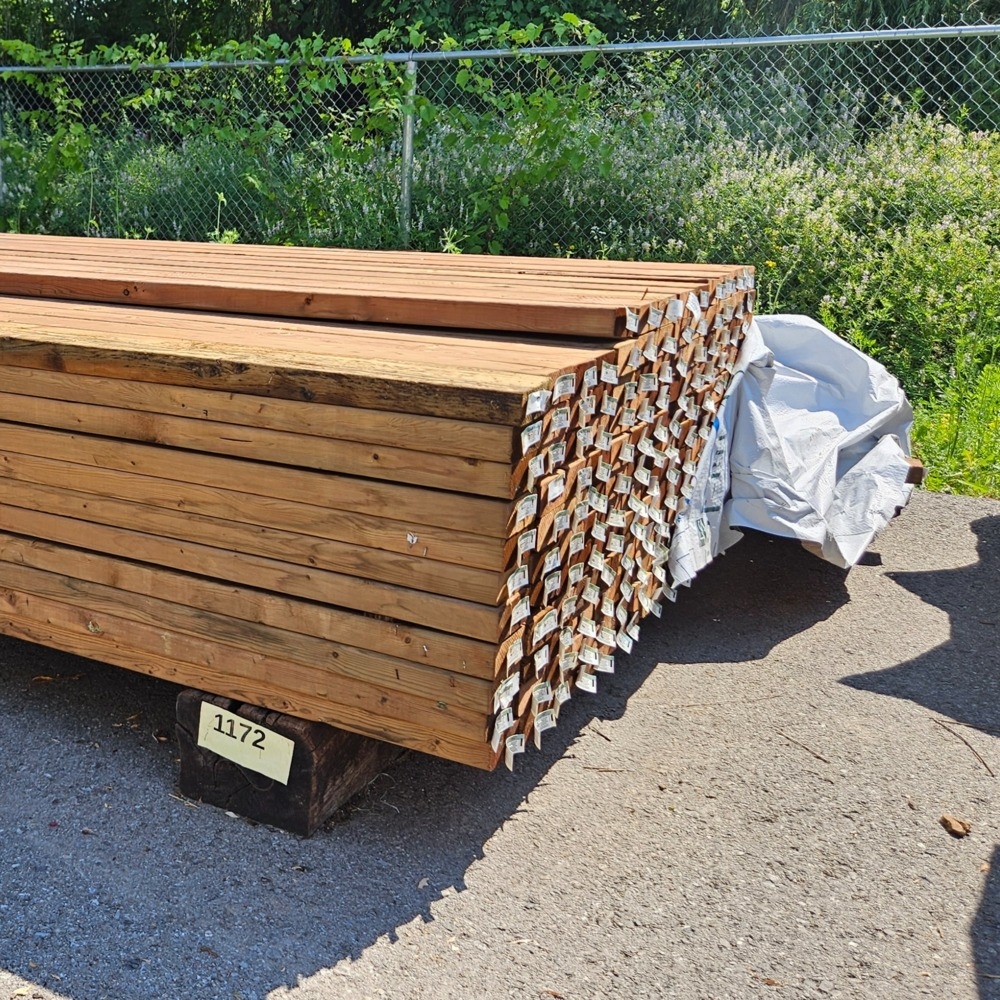
All softwood boards come with labels that indicate their grades. These stamps include other vital information about the boards as well, such as their moisture content, species, and grading agency. When purchasing lumber, contractors must read the label carefully to ensure they end up with the right materials for their project.
Common Dimensional Lumber Grades Explained
Now let’s talk about the grades themselves, as this is where things get interesting. Each grade of dimensional lumber has its own unique traits, pricing, and best applications. That means builders must exercise caution when selecting lumber types. The wrong one may prove to be expensive for their project.
Select Structural
High-strength lumber with minimal defects and tight knots, Select Structural is generally the most expensive type of softboard available. It is perfect for demanding structural applications, particularly those that feature high load designs.
No. 1 & BTR (Better)
Second in quality to Select Structural, No. 1 lumber still offers an impressive combination of structural strength and limited defects. They are commonly used for projects that prioritize the right balance between cost, structural performance, and aesthetics.
No. 2
Most commonly used general construction lumber, No. 2 boards certainly have more knots when compared with No. 1, but they do not get in the way of their performance. This makes No. 2 lumber an ideal candidate for many residential framing projects.
No. 3
The lowest grade lumber with visible defects, No. 3 boards are used for non-structural applications only, such as utility framing or blocking. They are not suitable for projects with high load requirements.
Stud Grade
Used primarily for vertical framing wall studs, stud grade lumber is quite stiff and strong. They are typically made for vertical weight requirements of walls under 10 feet.
Construction Grade
Many wooden boards might carry the label “Construction Grade” on them. This simply means that these boards can be used for light framing applications. However, it is best to verify their exact properties before using them to ensure they meet the specific criteria of the project in question.
Utility & Economy Grades
These are the lowest functioning grades of wood available, and needless to say, they are the least expensive too. It is best to restrict their use to non-structural tasks only, as they are quite lightweight.
Choosing the Right Lumber Grade for Different Construction Projects
Broadly speaking, a project’s individual specifications form the core selection criteria when it comes to choosing the most suitable construction lumber grade. However, as far as specifics are concerned, builders must account for the following:
Structural framing
Applications such as wall framing, beams, headers, and other load-bearing structures require the use of high-grade lumber. That said, the design requirements of the project, such as its span, loads, and engineering specifications, should play a role in selecting the best lumber species and grade.
Roof trusses and floor systems
Roof trusses and floor systems are highly demanding structures in terms of overall performance and load-bearing capacity. Hence, the lumber used for them should satisfactorily meet all of their individual specifications – whether it is in terms of design, span, or anything else.
Decks and outdoor structures
Moisture exposure is a major factor when selecting softwood boards for building decks and other outdoor structures. Chosen boards should be able to resist decay and insect damage. That is to say, while grading is still important here, the most critical criteria is actually the wood’s species and treatment options.
Interior renovation projects
Most non-load-bearing interior renovation projects can safely get by using lower grades of lumber. Lower grades are a more economical solution for minor repairs where the structural capacity and appearance of the wood used do not take center stage.
Finish carpentry applications
Whether it is trim work, exposed shelving, or decorative installations, lumber grades that prioritize aesthetics are the most suitable choice here. Boards with fewer knots guarantee cleaner results.
Factors Builders Should Consider Beyond Lumber Grade
It might seem as if no other criteria matters as much as lumber grade when selecting wood for construction and renovation projects. However, the truth is a couple of other factors are just as important. In fact, the following can majorly affect the performance of a project:
Species selection
Douglas, spruce, pine, fir, cedar – these are commonly used construction wood species, and each brings their own characteristics. Ultimately, their respective strength, density, workability, and durability will also determine if selected boards are suitable for a project or not.
Moisture content
Moisture content is one of the essential characteristics of high-quality construction lumber. Not only does it affect the stability of constructed structures, but it also impacts how individual boards behave in the long run. Properly conditioned materials are a must for outdoor projects as they resist common issues such as shrinkage, movement, etc.
Dimensional stability
Weaker or lower grade boards are more susceptible to excessive warping, twisting, bowing, or crooking. These can make installation problematic, emphasizing the importance of thoroughly inspecting purchased materials.
Strength characteristics
If the intent is to construct high-load-bearing structures, it is critical to look beyond lumber grades to ascertain board suitability. Builders must evaluate its species, size, and moisture content against the requirements of their project.
Availability and project timelines
Sometimes the best boards are the toughest to source. In such cases, planning plays a crucial role in ensuring the project’s budget and timelines are not exceeded.
Common Mistakes When Selecting Dimensional Lumber Grades
As convenient as it might seem to visit one’s local lumber yard and just pick the materials available there, it can often lead to the selection of the wrong boards. In fact, so can making any one of the following mistakes:
Choosing based only on price
Whether builders opt for the most expensive materials or the cheapest ones, both of them can be a mistake if they do not meet the structural or performance requirements of a project.
Ignoring structural requirements
Visually attractive boards might appear to be the right choice on the surface, but their inability to meet the load requirements of a project puts them firmly in the “wrong choice” category.
Misunderstanding grade stamps
Misreading grade stamps or not being familiar with the terminology printed on them can often lead to the selection of the wrong lumber grade.
Over-specifying premium grades
Using the highest grade for all applications simply increases the project cost without adding any real value.
Failing to inspect lumber before installation
Pre-installation checks are a critical step in preventing the use of damaged or distorted lumber, which can affect the long-term safety and performance of the entire project.
Practical Lumber Selection Tips for Builders and Contractors
Assessing lumber needs accurately and making informed choices based on the tips given below can help builders and contractors reduce onsite material waste while improving their project’s overall efficiency:
- Matching grades to project specifications: A project’s individual drawings and structural requirements should serve as the blueprint for lumber grade selection
- Working with trusted lumber suppliers: Lumber yards with years of experience and extensive inventory are better equipped to deliver high-quality construction wood onsite
- Planning material quantities accurately: Sizing up a project’s lumber requirements and placing orders after performing accurate quantity assessments curbs unnecessary expenses and material waste
- Balancing quality and project budget: By choosing lumber grades based on the demands of each application, builders can guarantee lasting results
Why Professional Builders Prioritize Proper Lumber Selection
Well-selected lumber products form the backbone of any construction or renovation project while offering the following distinct advantages:
- Improving structural performance: Correctly specified lumber improves the strength and reliability of each project
- Reducing project delays: Planning the purchase and delivery of the right materials keeps projects on track
- Maintaining consistent build quality: Carefully sourced lumber from trustworthy yards prevents reworks and ensures consistent builds
- Supporting long-term durability: The right lumber grades can increase the long-term performance of each project
Conclusion
Choosing the right lumber grade should not be a game of chance. Instead, it requires proper consideration, evaluation, and the option to pick and choose the right grade from a wide selection of available materials. Fonthill Lumber Inc.’s well-stocked lumber yard offers the largest selection of construction lumber. Contact us to enquire about available grades and their suitability for various applications.
FAQs
What do dimensional lumber grades mean?
Dimensional lumber grades indicate the quality of a particular piece of wood based on its strength, structure, and visible patterns and flaws.
Which lumber grade is best for framing?
The best lumber grade for framing depends entirely on the project’s requirements. However, Select Structural, No. 1, and No. 2are commonly used for framing applications.
What is the difference between No. 1 and No. 2 lumber?
The only major difference between the two is that No. 1 has fewer strength-reducing characteristics as opposed to No. 2 lumber.
How can I identify lumber grades?
Builders and contractors must thoroughly check the stamps and labels of softwood boards to identify their grades.
Does a higher lumber grade always mean better performance?
Not necessarily. Matching the project’s requirements with the lumber grade that best fulfils them is the right way to optimize project performance.
