
How Truss Roof Framing Improves Construction Efficiency
Key Takeaways:
Roof truss framing serves several useful purposes that most builders might not be aware of, including:
- Improved framing efficiency
- Faster installation
- Reduced labor requirements
- Consistent structural performance
- Optimized material usage
By framing roof trusses, builders can achieve larger roof spans without requiring many on-site adjustments.
Modern roof trusses are built for efficiency. By diligently carrying out the framing process, builders stand to gain a lot – from massive cost savings to faster installation times. In fact, this list does not stop here.
In today’s blog, Fonthill Lumber Inc., manufacturers of advanced, high-quality custom roof trusses in Ontario, will discuss everything builders need to know about truss roof framing and how it improves construction efficiency.
What Is Truss Roof Framing and How Does It Work?
Let us begin by explaining the process of roof truss framing in detail so you can understand it better:
What is truss roof framing?
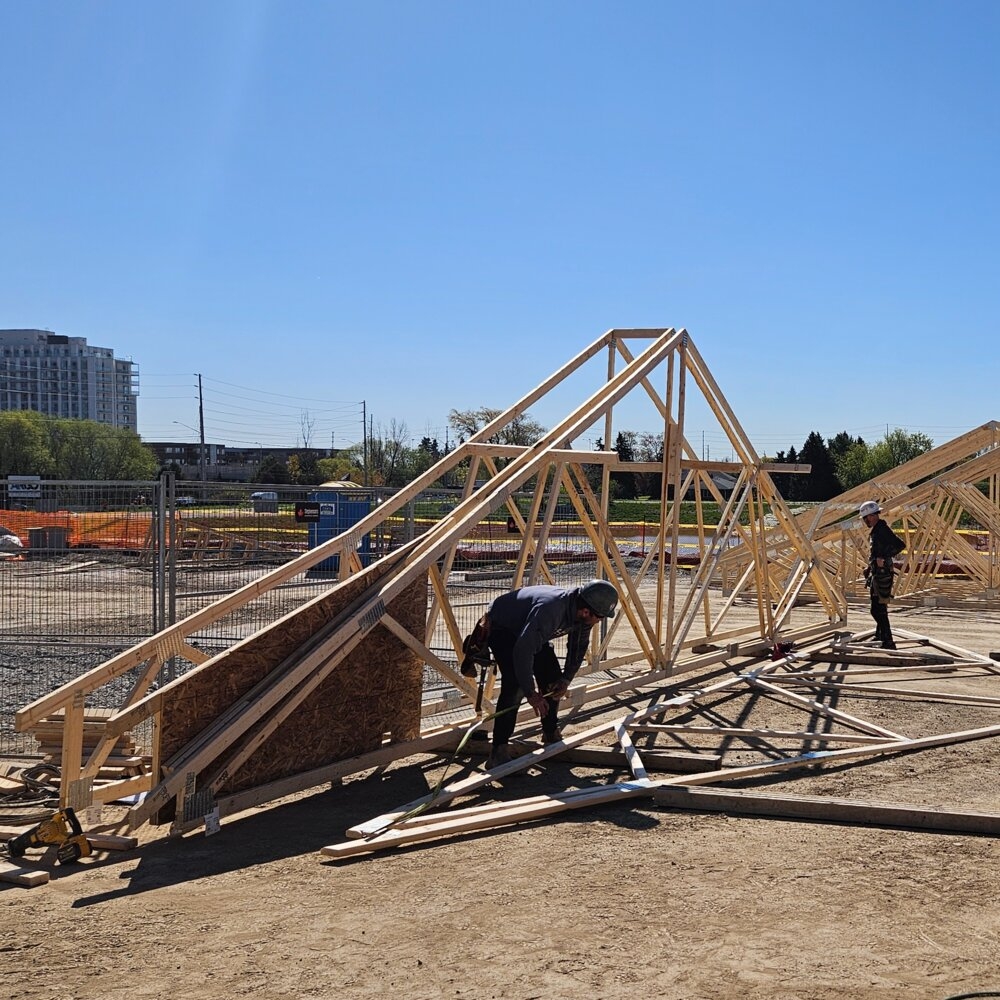
Roof truss framing is a simple method that uses engineered or prefabricated triangular frames to build roofs. These triangular structures act as the skeleton of the roof, ensuring the even distribution of loads across its walls.
Key components of a roof truss system
A typical roof truss system consists of a few essential components, including a top chord, a bottom chord, and internal web members. These together form the triangular shape that gives trusses their structural stability and strength. The number of members may vary depending on the truss type.
How trusses distribute structural loads
The triangular shape of trusses is not only strong, but it is also quite effective in handling and distributing the pressures caused by live and dead loads. For example, snow and wind loads are able to efficiently move through the entire roof without putting extra stress on any individual member.
Difference between truss framing and traditional stick framing
Stick framing involves the onsite cutting and assembly of individual rafters, which is inefficient, time-consuming, and prone to inconsistencies. Engineered roof truss systems, on the other hand, are precise, factory-built structures that are quick to install and do not require onsite modifications.
Why Builders Prefer Truss Roof Framing
There are lots of reasons to prefer roof truss framing – especially over rafters. In fact, residential roof truss framing can dramatically improve project speed while bringing other benefits:
Faster installation and reduced labor time
Due to their prefabricated nature, trusses are quick to install. In fact, their labor requirements are also quite low as a result, and a smaller crew can efficiently position large sections of the roof in a single day.
Improved structural consistency
Precisely engineered trusses are manufactured in controlled facilities where there is no scope for human error. This results in the construction of consistent trusses with uniform dimensions and load performance all across.
Better material efficiency and low onsite waste
Compared to stick framing, where rafters are individually hand-cut, leading to excessive material waste, roof trusses optimize material usage by reducing offcuts and using only the amount of lumber needed to manufacture them. This also reduces onsite waste, thus contributing to a cleaner, less cluttered, and more efficient jobsite.
Simplified large-span roof construction
Large-span trusses are a challenge to build with rafters. However, trusses simplify the process as they can span longer distances without requiring additional supports or compromising their structural performance in any way.
Improved project scheduling and workflow
Supporting faster floor installations, roof trusses allow other trades to start work on time. This facilitates the quick completion of projects with a tight timeline.
Quick Recap: Benefits Of Roof Truss Framing
- Speedy installation
- Cost and labor savings
- Accurate and consistent construction
- Superior load distribution
- Optimized material usage and cleaner jobsites
- Support for roofs with large spans
For builders who want deeper insights into the world of trusses, our roof truss guide can help with its deep dives and examples of practical applications.
Types of Roof Trusses Commonly Used in Framing
Depending on the architectural and structural needs of a project, different roof truss framing systems might be used. These include:
King post trusses: These are simple, short-span trusses that are used to build small and cost-effective homes. King post trusses are also very easy to install.
Fink trusses: The most common roof framing with trusses options out there, fink trusses use a distinct W-shaped web pattern to ensure the efficient distribution of loads.
Scissor trusses: Supporting the creation of vaulted ceilings, scissor trusses slope their bottom chords upwards. They are frequently used in modern homes.
Other truss types that are commonly used include attic trusses (used to create living or storage spaces in roofs), mono trusses (used to build garages or other additions), and parallel chord trusses (for low-slope roofs). Our residential roof truss guide covers most of them.
How Roof Truss Framing Improves Construction Efficiency
As we have already discussed, residential roof trusses are one of the best ways to improve the efficiency of any construction project. Due to their prefabricated nature, they significantly cut down framing time, helping builders complete projects faster.
That’s not all. Since all roof trusses are custom-built, there is no scope for framing errors. What builders get are dimensionally accurate structures that are ready to be installed. In fact, their predictable installation timelines and procedures help builders manage multiple projects at the same time in a more efficient manner.
Lastly, pre-planned roof trusses already account for plumbing, electric runs, and HVAC systems, thus improving coordination between various trades. The result is a project that wastes less material, builds faster, and reduces project costs and labor requirements.
Checklist: Roof Truss Efficiency Advantages
- Timely completion of projects with tight deadlines
- Reduced labor dependency
- Minimal onsite reworks or adjustments
- Cleaner and easier to organize sites
- Better material planning and usage
- More predictable construction timelines
Step-by-Step Roof Truss Framing Process
For builders who are new to roof truss framing or experienced builders who want to brush up on the basics before embarking on their next project, this mini step-by-step guide of the framing process will ensure proper structural installation and maximum efficiency:
Step 1: Roof design and load planning
The entire process begins with collaborating with a truss vendor with whom details about the project, such as roof dimensions, pitch, and load requirements, should be shared. This ensures the fabrication of precise trusses that cater to the project’s needs.
Step 2: Selecting the right truss type
Next comes truss type selection. Here, builders and fabricators get together to brainstorm which truss type would serve the needs of the project best. The most appropriate option is based on the span, design, and structural demands of the project.
Step 3: Manufacturing and delivery
Once trusses have been engineered and assembled precisely in an off-site controlled facility, they are ready to be shipped. Most manufacturers offer just-in-time delivery to prevent construction site clutter or damage to the trusses that may result from being stored onsite for too long. Once delivered, all builders have to take care of is the installation process.
Step 4: Site preparation and lifting
To ensure proper installation, it is important to rent or hire large-scale lifting equipment such as cranes or spider lifts. Construction sites must first be prepared to allow easy access for lifting solutions. Once the site is ready, the safe and precise positioning of trusses can begin.
Step 5: Truss installation and bracing
While bracing might seem an unnecessary step in the installation process, under no circumstances should it be skipped. Temporary bracing ensures trusses are perfectly aligned and stable before they can be permanently fixed in place. That said, it is always recommended to install trusses sequentially.
Step 6: Final inspection and roof sheathing
The last step in this journey involves verifying the alignment of trusses before installing permanent bracing and roof sheathing. This ensures the roof maintains its structural integrity and load capacity in the long run.
Steps Rewind: Truss Roof Framing Workflow
- Evaluate roof design, load, and structural requirements
- Calculate span and load conditions
- Match truss style to the specifications of the project
- Prepare site before installation
- Position trusses with the help of cranes and apply temporary bracing
- Install roof sheathing and permanent bracing
- Conduct final roof truss inspection for alignment and accuracy
Common Challenges in Truss Roof Framing and How to Avoid Them
Even if builders follow all the right steps, a few roof framing issues might still arise. Here is how they can be avoided:
Incorrect truss spacing
Improper spacing can make trusses unstable while adversely impacting their structural load performance. To prevent this, builders must use precise lifting solutions and install temporary bracing first so alignment issues can be fixed.
Poor bracing and support installation
Installing temporary bracing prevents movement during installation. This ensures perfect alignment before permanent bracing can be affixed.
Handling and transportation damage
Improper delivery practices are one of the leading causes of truss damage during shipment. The best way to avoid this is to partner with a reliable truss manufacturer with years of experience in fabricating and shipping trusses.
Conclusion: Why Truss Roof Framing Is Preferred in Modern Construction
Roof truss framing improves construction efficiency at every stage of the project. Builders prefer the cost and time savings it brings when compared to rafters. They also appreciate its precision build, faster installation times, and greater structural consistency. However, to get each of these benefits, builders need to partner with the right truss fabricators first.
Fonthill Lumber Inc. is a well-established manufacturer of custom roof trusses in Ontario. With over 75 years of experience in the industry, our prefabricated truss systems provide the kind of structural performance other truss engineers can only dream of. Contact us to get trusses of any span, shape, or size.
FAQs
What is truss roof framing?
It is a type of roofing system that makes use of prefabricated triangular structures to ensure strength, consistency, and even load distribution.
Are roof trusses better than rafters?
When compared to rafters, trusses are quick to install and more cost-effective for standard residential projects.
How far can roof trusses span?
Roof trusses are capable of spanning incredible lengths, depending on the design of the truss and its load requirements.
What are the advantages of truss roof framing?
Some of the core benefits of roof truss framing include faster installation, consistent build and performance, optimized material usage, and reduced labor requirements.
How long does roof truss installation take?
While exact installation times depend on the size of the truss, it typically takes a few days to install most standard residential roof trusses.
