
Achieve Your Project’s Sustainability Goals With Roof Trusses
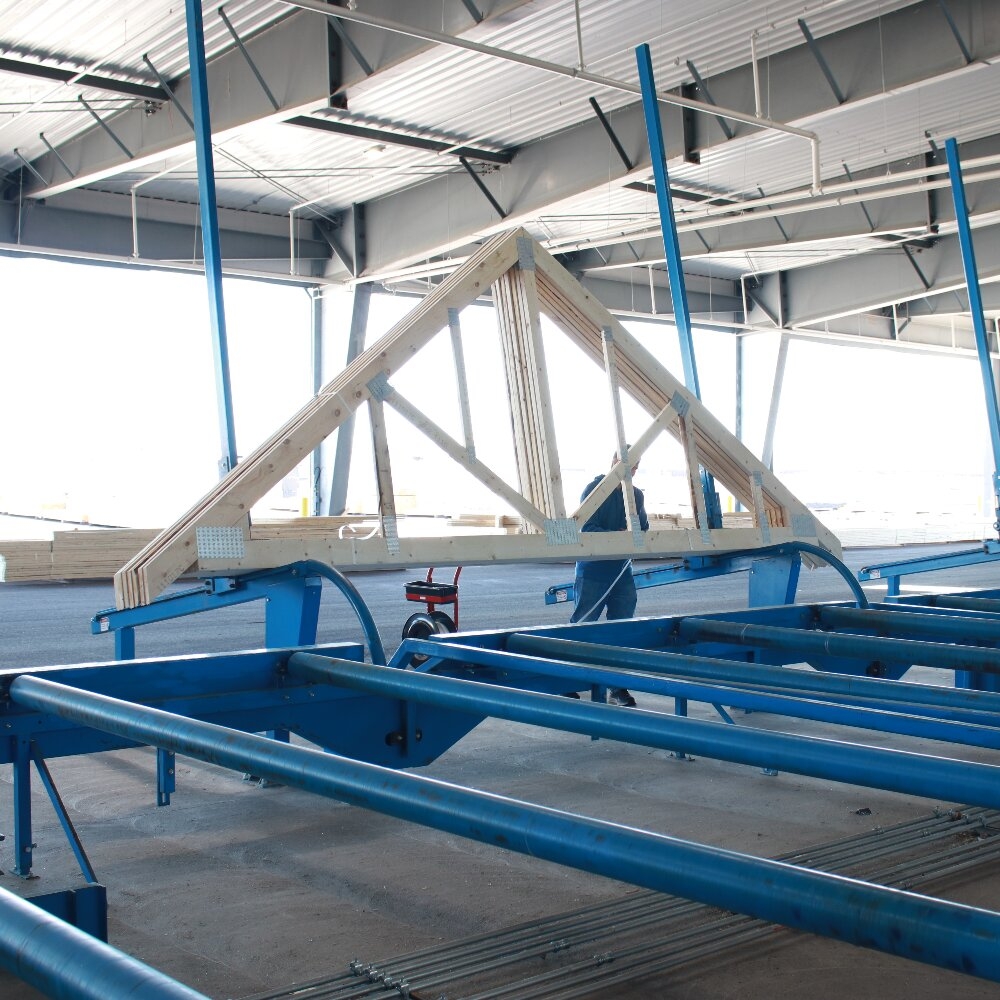
One of the most versatile structural elements around, roof trusses can instantly transform the look, feel, and integrity of any construction project.
Made of timber rather than metal, these impressive systems are more than just a network of chords, members, wall plates, and nail plates. They are the means to achieving your project’s sustainability goals.
Recycling or using energy-efficient appliances to construct green projects is not enough. You need to build sustainability into its very DNA, and roof trusses can help you do just that.
For builders and contractors across North America, Fonthill Lumber Inc. provides certified truss systems that help reduce on-site waste and boost energy efficiency. Let us show you how.
The Role Of Roof Trusses In Sustainable Construction
If you are planning to obtain a green certification for your next construction project in Ontario, you should add roof trusses to it. They have been engineered to promote sustainability. Here’s how they help:
Efficient use of materials
Built with minimal material for maximum strength, roof trusses guarantee the lowest waste of lumber. Especially when compared to traditional stick framing, which gives rise to tremendous amounts of wasted wood onsite. Since trusses are designed with the help of precise structural calculations, the opportunity for wastage does not arise.
This translates to the usage of less lumber per construction project, thus helping in the preservation of the environment. Furthermore, minimal offcuts reduce the instances of scrap waste too. With intelligently crafted roof truss systems, you can lower both project cost and its environmental footprint.
Reduced jobsite waste
Every single roof truss system is manufactured in a controlled facility, which completely eliminates the need for onsite modifications. When you compare this to traditional framing, the benefits become obvious.
Not only is there a significantly lesser amount of excess lumber to dispose of, but there are also fewer mistakes. Reworks are not typically required, thus eliminating another layer of possible waste. What you end up with is a cleaner, more organized jobsite that does not contribute to landfill or disposal expenses.
Improved energy efficiency for finished projects
Did you know residential roof trusses can directly improve the insulation and overall energy efficiency of the house you are building?
These sturdy lumber structures help in the creation of consistent attic space, which, in turn, enables better airflow planning. It also makes it easier to integrate ventilation systems while allowing for proper insulation depth.
In fact, equipping a home with roof trusses is guaranteed to give its thermal performance a boost. This helps in the reduction of heating and cooling loads, thus ensuring homeowners can enjoy the benefit of lower energy consumption for the long term.
Reduced transportation impact
Transportation not only contributes to the increasing costs of a project but also to its carbon footprint. Bulky frames and timber can be tough to transport, whereas a residential roof truss system can be engineered to maximize transport efficiency.
So instead of receiving multiple raw lumber deliveries, you end up with a single shipment containing a fully packaged system complete with pre-assembled components and optimized bundles. Since transport runs are reduced to the minimum, fuel usage and carbon emissions automatically reduce too, thus getting you closer to earning that green certification.
Long-term structural durability
Building a sustainable project is not restricted to using green materials. Sustainability is a long-term thing, which means your project should be built to last.
Timber trusses enhance the structural stability and endurance of your build by offering consistent load-bearing performance for decades to come. In fact, properly designed and installed trusses are great at resisting warping. They do not settle unevenly either and support long-term roof performance.
Moreover, the need for future replacements is automatically reduced if you use trusses made of high-quality lumber. The truth of the matter is, the longer a structure lasts without requiring repairs or replacements, the more sustainable it becomes.
Conclusion
Sustainable construction is key to securing a bright future for the generations to come. However, building sustainable projects requires partnering with the right vendors.
At Fonthill Lumber Inc., we provide premium, sustainable roof truss systems to builders across North America. Engineered to reduce waste and improve efficiency, our solutions meet all modern building standards.
Contact us to get trusses that not only meet your project’s structural requirements but also help you deliver stronger, smarter, and more sustainable projects.
FAQs
Which is a more sustainable option – roof trusses or stick framing?
Roof trusses are the more sustainable choice as they use less lumber to make and do not generate as much onsite waste as stick framing does.
Can roof trusses support green building certifications?
Yes. Offering material efficiency and energy-saving performance along with long-term durability, roof trusses can help you meet Ontario sustainability benchmarks.
Are engineered trusses compatible with modern sustainable home designs?
Absolutely. Builders can order them in custom specifications to ensure they integrate easily with energy-efficient ventilation systems and home designs.
