
A Practical Builder’s Guide To The Anatomy Of Residential Roof Trusses
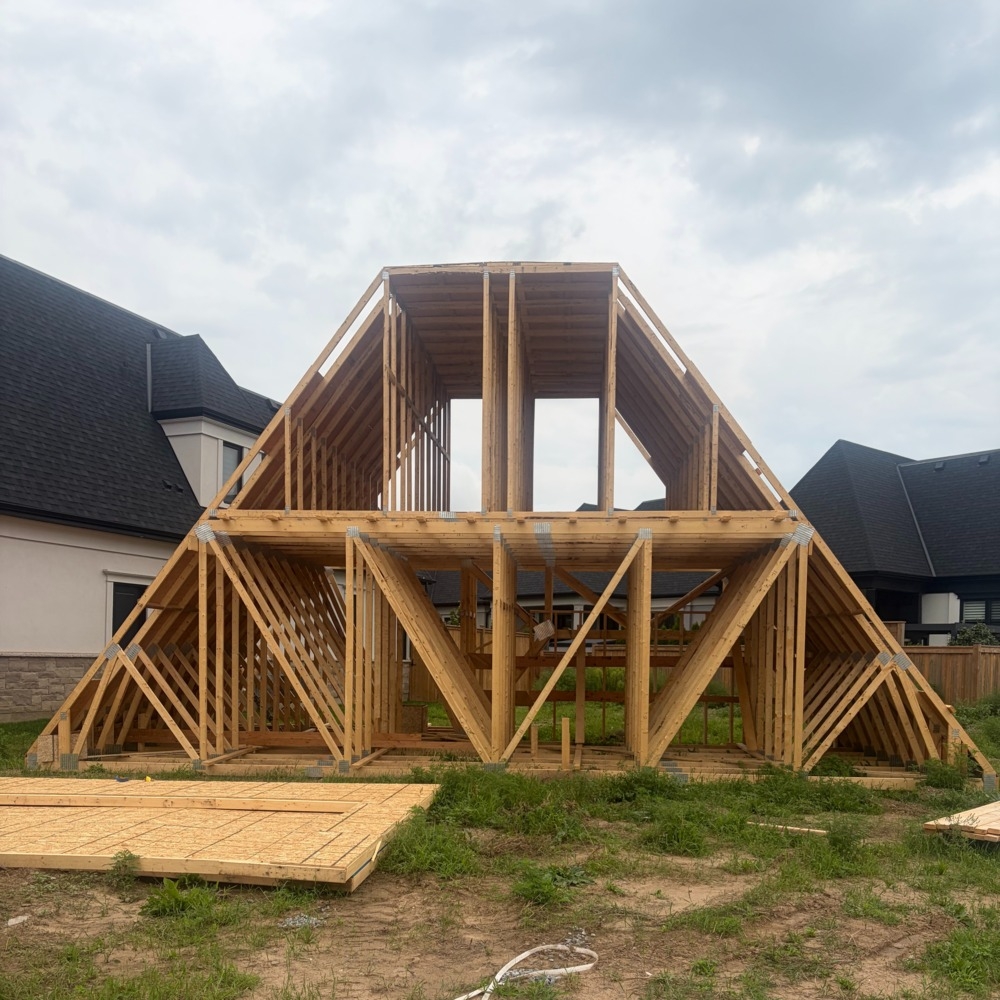
A timber roof truss might look like a single continuous unit, but that is just the magic of smart engineering. In reality, each roof truss is made up of a number of individual components that contribute to its strength, durability, and load-bearing capacity.
Understanding roof truss anatomy can help builders specify more accurate trusses for their projects as well as ensure efficient installation. In today’s blog, Fonthill Lumber Inc., engineers of the best custom trusses in Ontario, will walk you through the essential components of a roof system.
What Is The Anatomy Of A Roof Truss?
The anatomy of a roof truss refers to the individual members that give it its signature triangular shape. Each interconnected member in this engineered framework has a role to play – especially when it comes to the transference of loads from the covering of the roof down to its supporting walls.
Unlike rafters, where each member works individually, the components of a roof truss work together to create a solid and complete system.
Why Is Learning About The Anatomy Of A Roof Truss Important?
Learning about the anatomy of roof trusses is critical for builders as it can help them understand and interpret a typical truss layout much more accurately. It also helps them identify truss configurations while improving their grasp of why spacing, connectors, and member placements matter. When you know how a carefully engineered system works, you are better equipped to spot defects and errors too.
Key Components Of A Roof Truss System
The following parts make up most residential roof trusses:
Top Chords
Responsible for the sloping upper edges of a roof truss, top chords maintain the roof’s shape and pitch while supporting the weight of sheathing andother materials. They also handle compression forces, which are typically created by roof loads. These forces are then transferred through the rest of the system to prevent additional strain on individual members.
Bottom Chords
Bottom chords form the base of this engineered triangle by connecting sloping top chords. Running horizontally between the ends of the truss system, they resist tension and may even become a part of the ceiling depending on the building’s design. In such cases, they influence available interior space.
Web members
Shorter than the top and bottom chords, web members are placed between the two, serving as connecting and supporting agents. Their arrangement may vary depending on the type of truss used. In any case, they help in the division of a truss into smaller triangular subsections so that external forces can be efficiently transferred across the entire structure.
Connector Plates
Connector plates are placed at the intersections of individual members to hold them together. They are made of metal and pressed firmly into the wood to create strong connections that withstand the impact of forces and loads in the long run. Their individual size, position, and specifications are entirely dependent on the layout and the requirements of the project concerned.
Bearing Points
Finally, bearing points are precise load transference points between the truss system and its supporting structures. Determining proper bearing points is essential to maintain the integrity of the entire house, especially when external loads and forces are applied.
How Does Roof Truss Anatomy Differ Across Major Types
Residential roof trusses come in various types, and the individual components of a truss system can vary based on its type. We have covered the major types below:
- Fink Trusses: Fink trusses feature a repeated web pattern to create the truss’s trademark triangular shape.
- King Post Trusses: The most distinct trait of a king post truss is its central vertical member that is responsible for connecting its bottom and top chords.
- Scissor Trusses: Scissor trusses are known for their sloped bottom chords, which allow them to create impressive vaulted ceilings.
The design principle and core components might remain nearly identical across all truss types, but how they are executed makes all the difference in their final shape.
Conclusion
Every component of a roof truss system is irreplaceable. They all serve a specific purpose and are essential for the geometry and integrity of the entire roof system. If you want the most complete and robust roofs for your project, let us help. Fonthill Lumber Inc.’s residential roof truss systems are known for their exceptional quality and design all across Ontario. Contact us to get custom-specified trusses in any size and shape.
FAQs
Which is the most important component of a roof truss system?
There is no single critical component, as each of them works together to create the distinct triangular profile of a roof truss system. They are all equally important.
What connects the individual members of a roof truss system?
Metal connector plates are responsible for joining two truss members at their meeting point.
Why are all roof trusses almost universally triangular?
They are all primarily triangular because it is the strongest, most efficient shape for a roof that supports effective load transfer throughout the structure.
